A new, more natural voice — switchable speech engines
The robot's voice sounds noticeably more human, and you can now choose which speech engine it uses to trade off naturalness against speed and memory.
A Voice People Want to Listen To
A robot that sounds robotic gets tuned out. For reception desks, guided tours, and anything where the robot talks to the public for more than a few sentences, the quality of the voice decides whether people keep listening.
Speech synthesis now offers more than one engine, and you pick the one that fits.
What's New
- A more natural default voice — Smoother phrasing and more human intonation, especially on long passages like tour narration
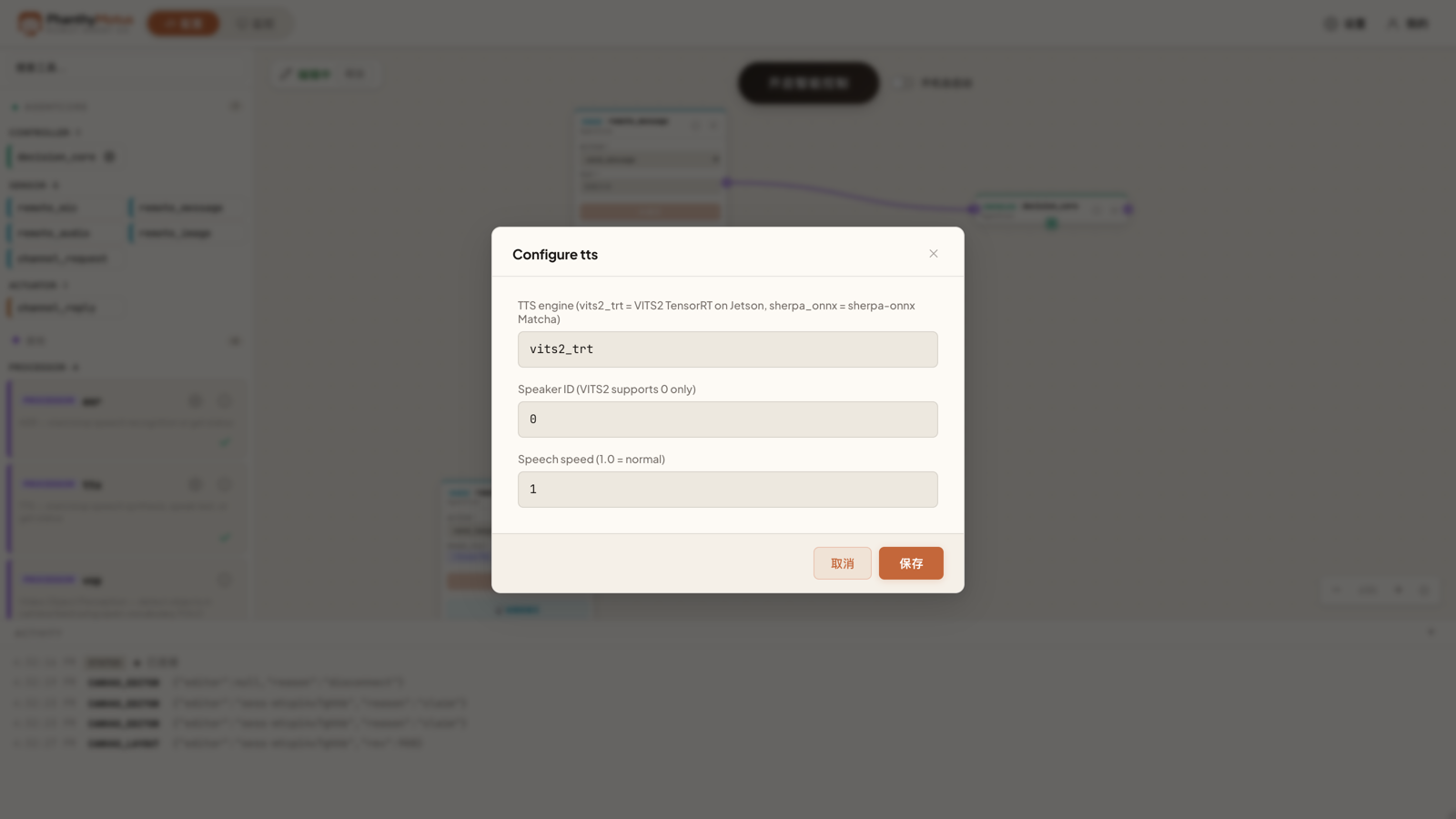
- Switchable engines — Choose your synthesis engine from the TTS card instead of being stuck with one
- Pick your trade-off — A lighter engine for constrained hardware, an accelerated one where speed matters most, a higher-quality one where the robot is talking to guests
- Switch without rebuilding — Change the engine in the card's configuration; no reinstall and no redeployment
How to Try It
Open the TTS card on the canvas, choose an engine, and have the robot read the same paragraph on each. Long narration is where the differences show up most clearly — a short "hello" sounds fine on any of them.
Note that a freshly deployed engine warms up on first use, so the very first sentence can take a few seconds longer than the ones after it.