T800 can now walk, speak and remember a motion you taught it
The EngineAI T800 driver grows a speaker, walking with real gaits, a motion recorder, and a posture switch that always routes through standing — plus honest state reporting instead of guesses.
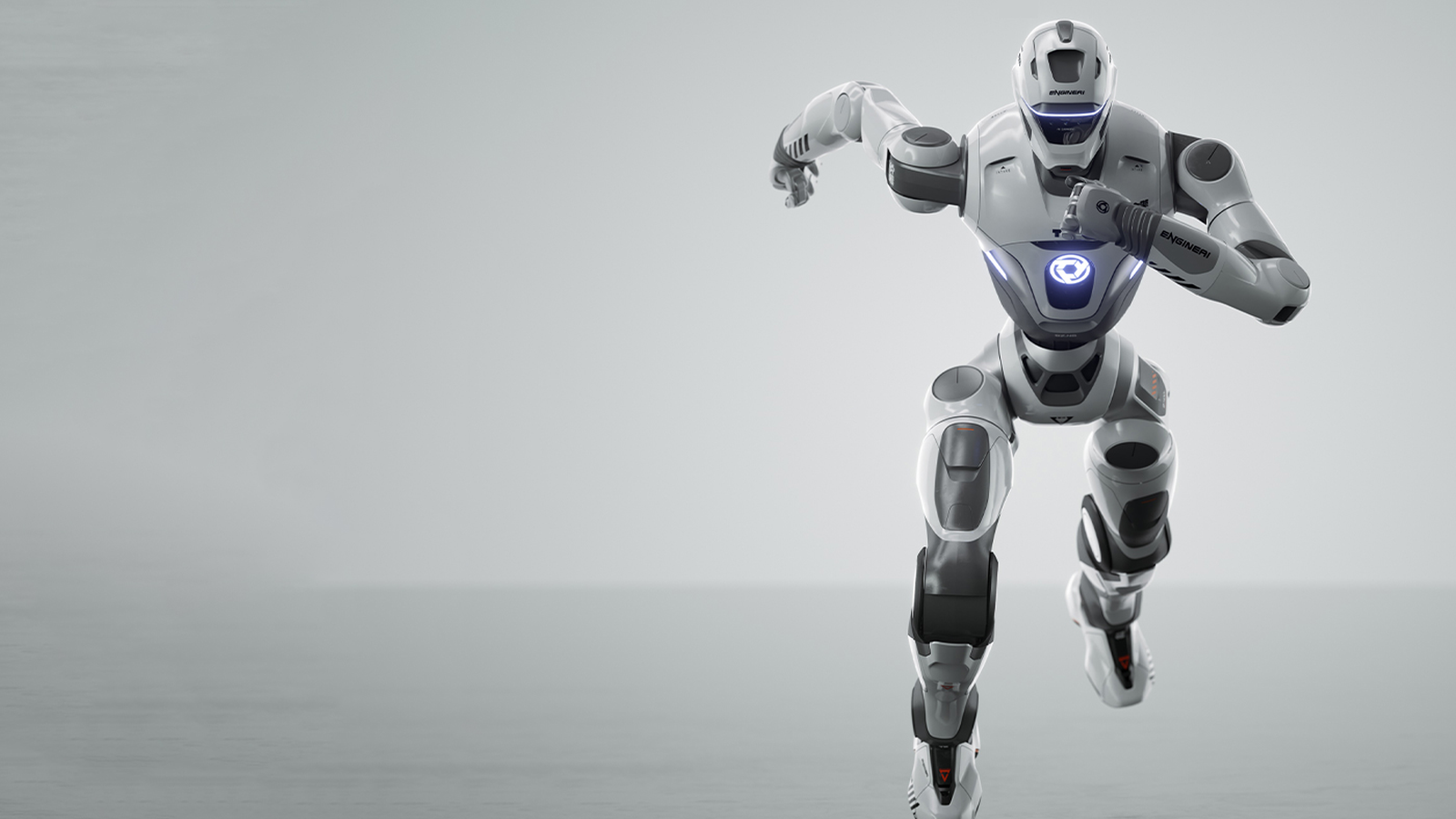
The robot that could only nod now moves, talks and repeats itself
Until now a T800 on the platform could turn its head and greet you. This release gives it a voice, a walk, and a memory for motions — and, just as importantly, makes each of those things stop when you tell it to stop.
What's new
- It speaks through its own speaker. The speaker card plays whatever audio the canvas feeds it with low latency, and keeps the start-up chime in a separate queue from live speech — so real speech can cut in instead of waiting behind a jingle.
- Walking that only offers what the firmware really has. Motion modes are limited to the two the robot actually supports, planar velocity is clamped to a safe range, and timed moves are short by design and never block the queue — so a stop command executes immediately instead of lining up behind the move it is meant to cancel.
- Gaits you can trust. Only the gaits verified on the real machine are exposed.
- Teach it a motion, play it back. The motion recorder captures joint movement and replays it, so a demo you performed once becomes something the agent can trigger.
- Posture changes take the safe route. Standing, sitting and lying down are the three verified postures, and switching between two non-standing postures passes through standing automatically — sit → lie becomes sit → stand → lie, and the tool tells you the path it took.
- No more invented states. Status is a plain read-only query now, internal firmware states are no longer handed to the model as if they were commands, and when the posture genuinely cannot be determined the answer is "unknown" rather than a guess.
How to try it
Update the EngineAI T800 driver from the console, then drop the speaker, locomotion, gait, posture and motion-recorder cards onto the canvas. Wire the speaker card to a text-to-speech output and the robot talks; ask the agent to walk and it walks.
Clear the space around the robot before any walking or posture command, and keep the emergency stop within reach. Sitting and lying down are large movements even when they take the safe path.
Contributed by community developers.