Franka FR3 joins the platform — plug in the cable and it finds itself
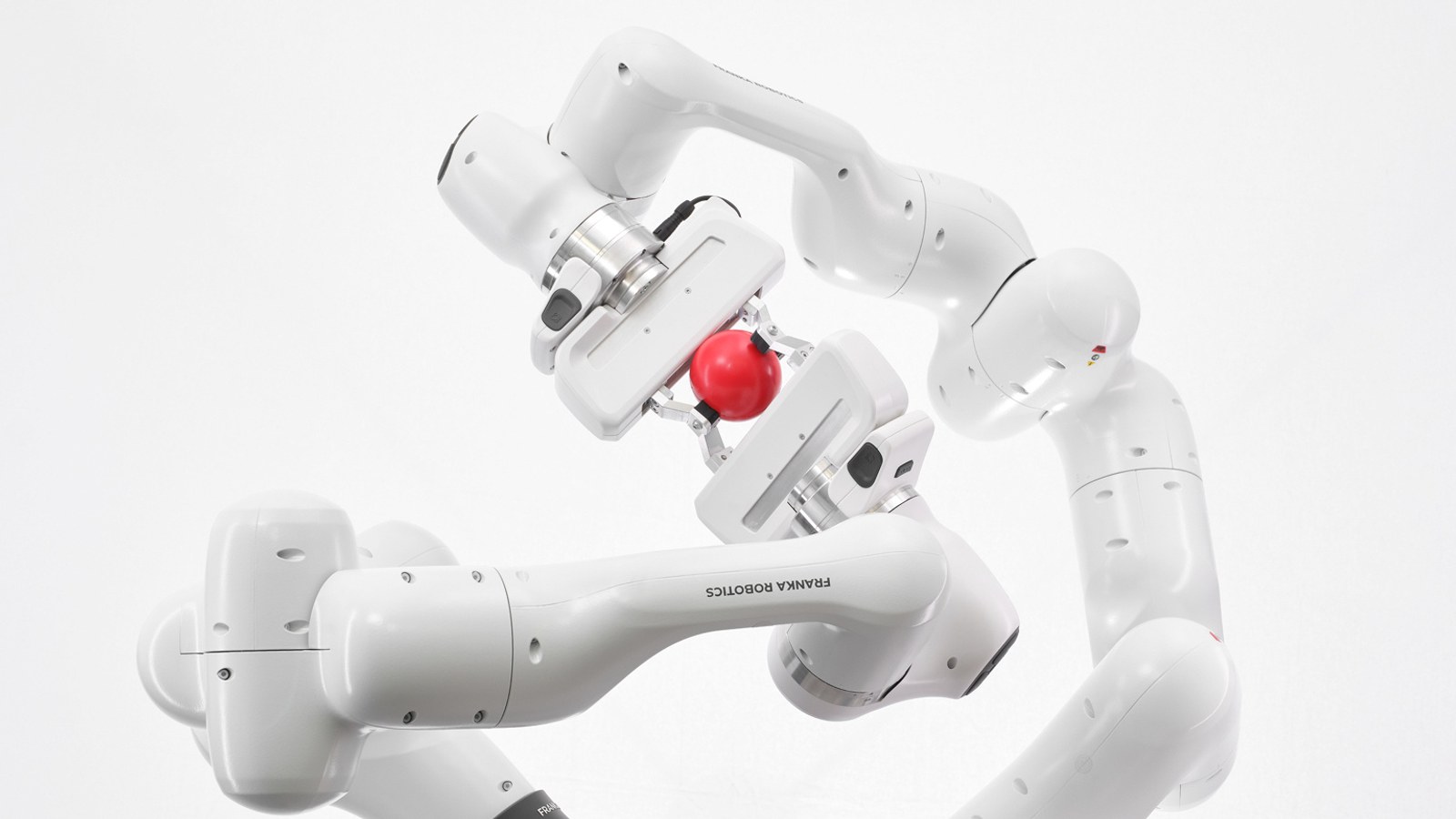
The Franka Research 3 is now supported with a read-only joint-state card: the real angle of all seven joints at 1–30 Hz, rendered as a skeleton that fetches its own URDF. The config dropdown lists the arms found on the directly connected wired network, by model, serial and IP — and one driver can serve several arms at once.
Read-only, on purpose
This first version reads the arm and nothing else: seven joint angles, in radians and degrees, under the joint names from the URDF, at a display rate you choose between 1 and 30 Hz. The connection to the arm is only opened once you start the card.
Discovery that cannot touch the robot
Finding an arm on the network is the part that usually goes wrong, so it is deliberately narrow. The scan only looks at physically wired private networks, bounds its concurrency, its response size and its total time, and reads only the arm’s own web page and name plate — it never opens the control interface and never sends a command. A host that times out does not take the others down with it, and the result is cached for a couple of minutes while idle.
Several cards can point at the same arm and share one connection; different arms get their own, each retrying and stopping independently.