What's New
Latest Updates
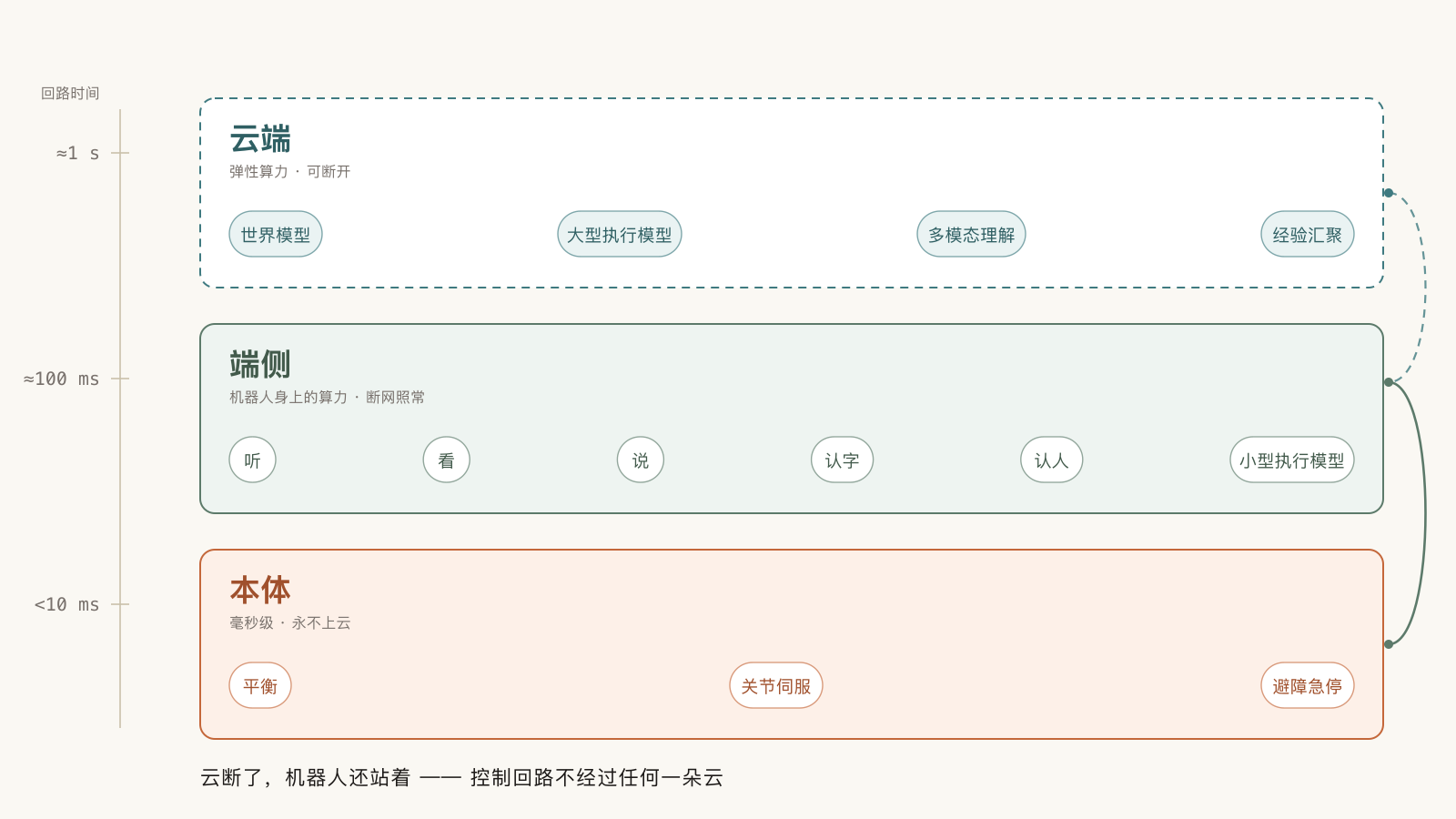
Why we are building a cloud for embodied AI
An embodied agent is not the same kind of thing as a chat agent: its output cannot be undone, and latency is a safety property rather than a comfort one. This is how we think about the four kinds of model on a robot, the single criterion we use to decide which of three layers each belongs to, and the two lines we will not cross — the control loop passes through no cloud, and local and remote stay one interface.
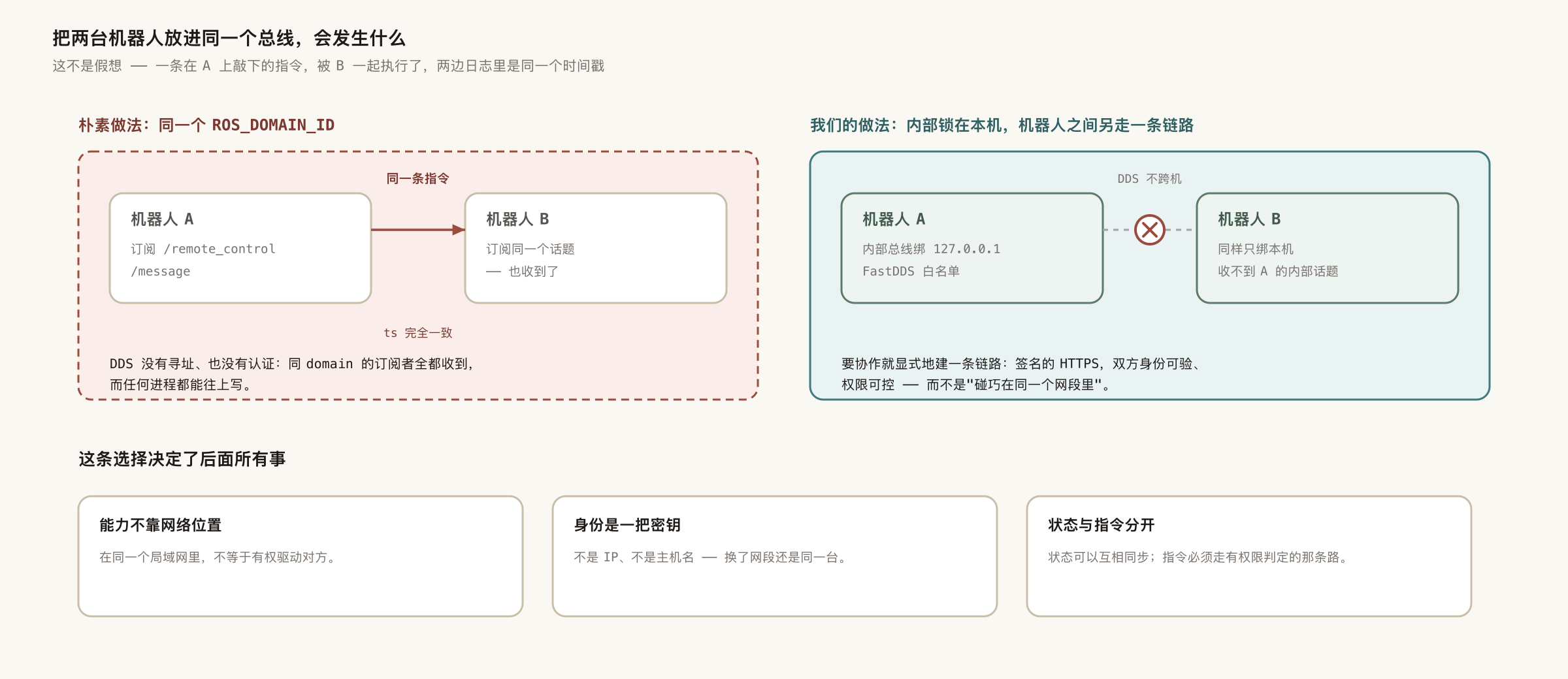
Who is on the other end, why trust it, what may it do — the multi-robot peer mesh
Five robots in one building and none of them knows the others exist. Putting them on one ROS domain is the obvious move and also the dangerous one: a command typed on one robot was executed by a second, same timestamp in both logs. This is the link we built instead — key-based identity, Bluetooth-style six-digit pairing, signed requests against a pinned key, and three gates before a peer can move anything. Including the scars: a keyword-based permission check that let a read-only peer drive locomotion, and a config flag that looks like a safety gate but is read by no code.
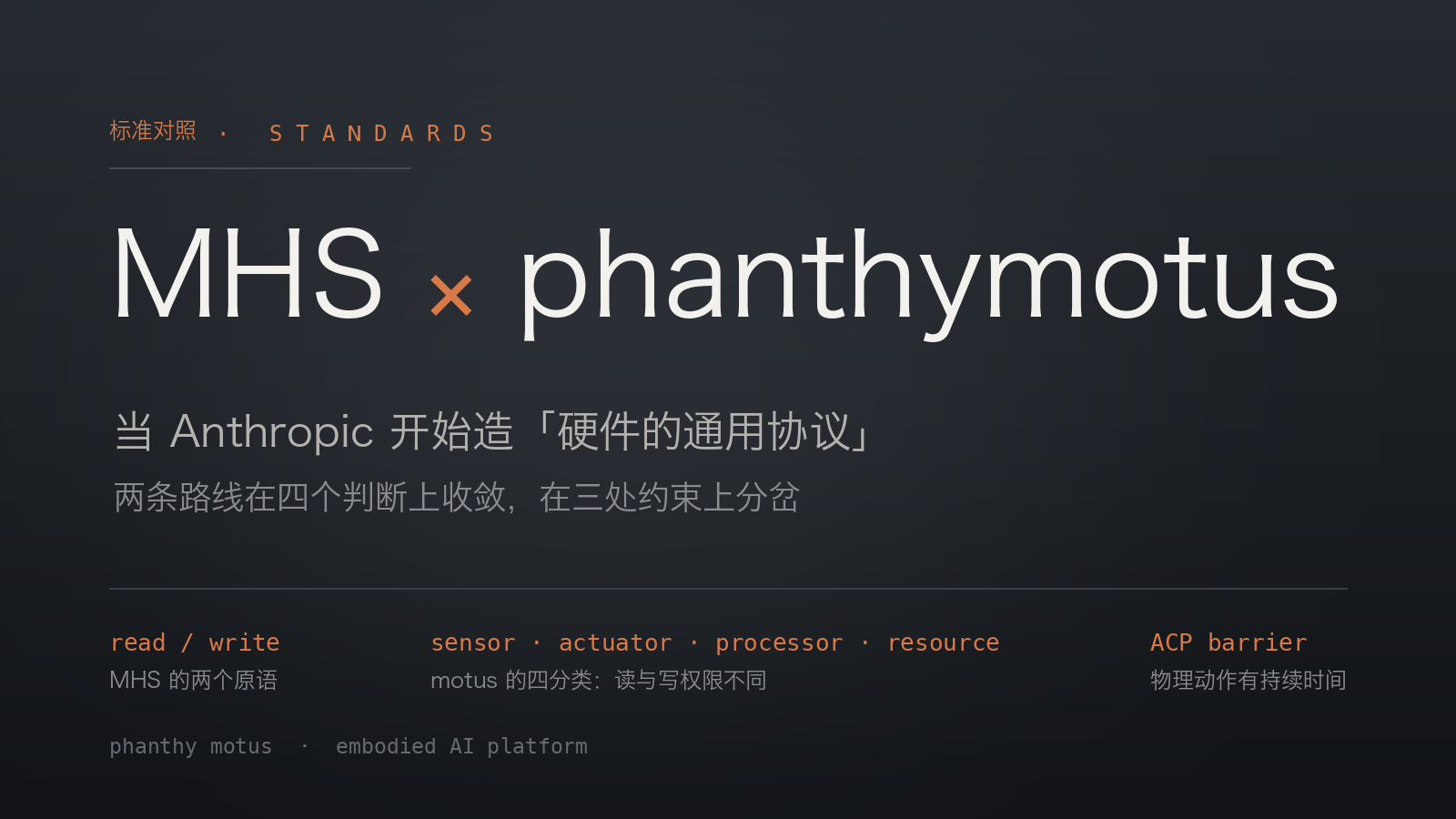
MHS and PhanthyMotus: what converges when an agent has to move real hardware
Anthropic opened a research preview of the Model Hardware Standard. Starting from a microscope rig and from a walking humanoid, two teams converged on four judgments and diverged on three constraints. A grounded comparison of the problems, the logic, and what is actually shipping.
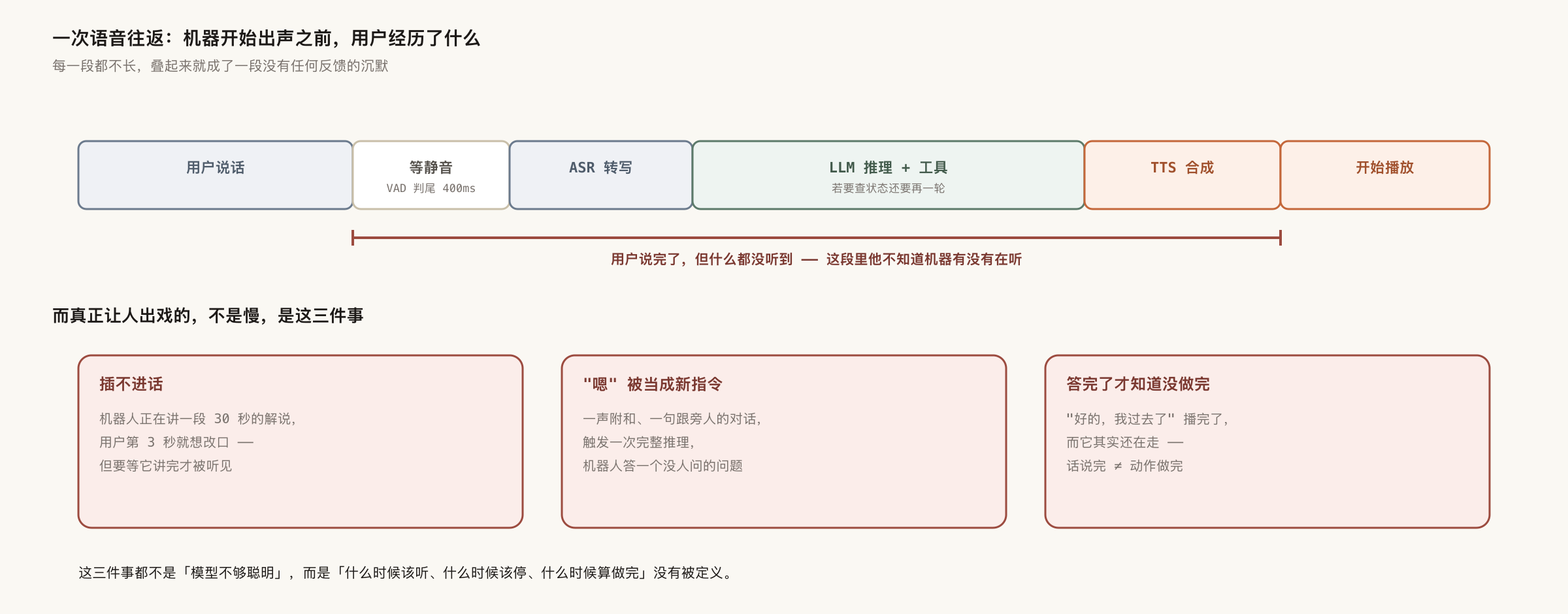
When to listen, when to stop, when it counts as done — the robot dialogue mechanism
Wiring up ASR, an LLM and TTS takes an afternoon. Holding a conversation that gets interrupted is a different problem. Three failures from the field — you cannot get a word in, a grunt becomes a command, the answer finishes before the action does — and the mechanisms each one forced: priority routing, three interrupt modes, and a completion protocol. Including one knob we found is not actually wired up.