What's New
Latest Updates
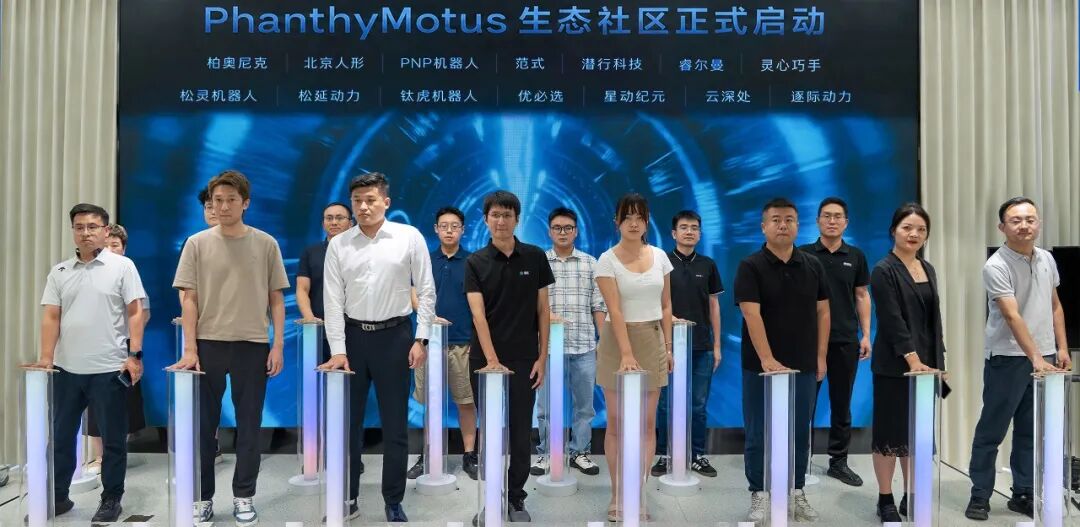
PhanthyMotus goes from open source to co-building
At a launch event witnessed by more than ten embodied-AI hardware makers, PhanthyMotus opened its developer incentive programme: a shared hardware pool for remote debugging and free compute tokens for contributors.
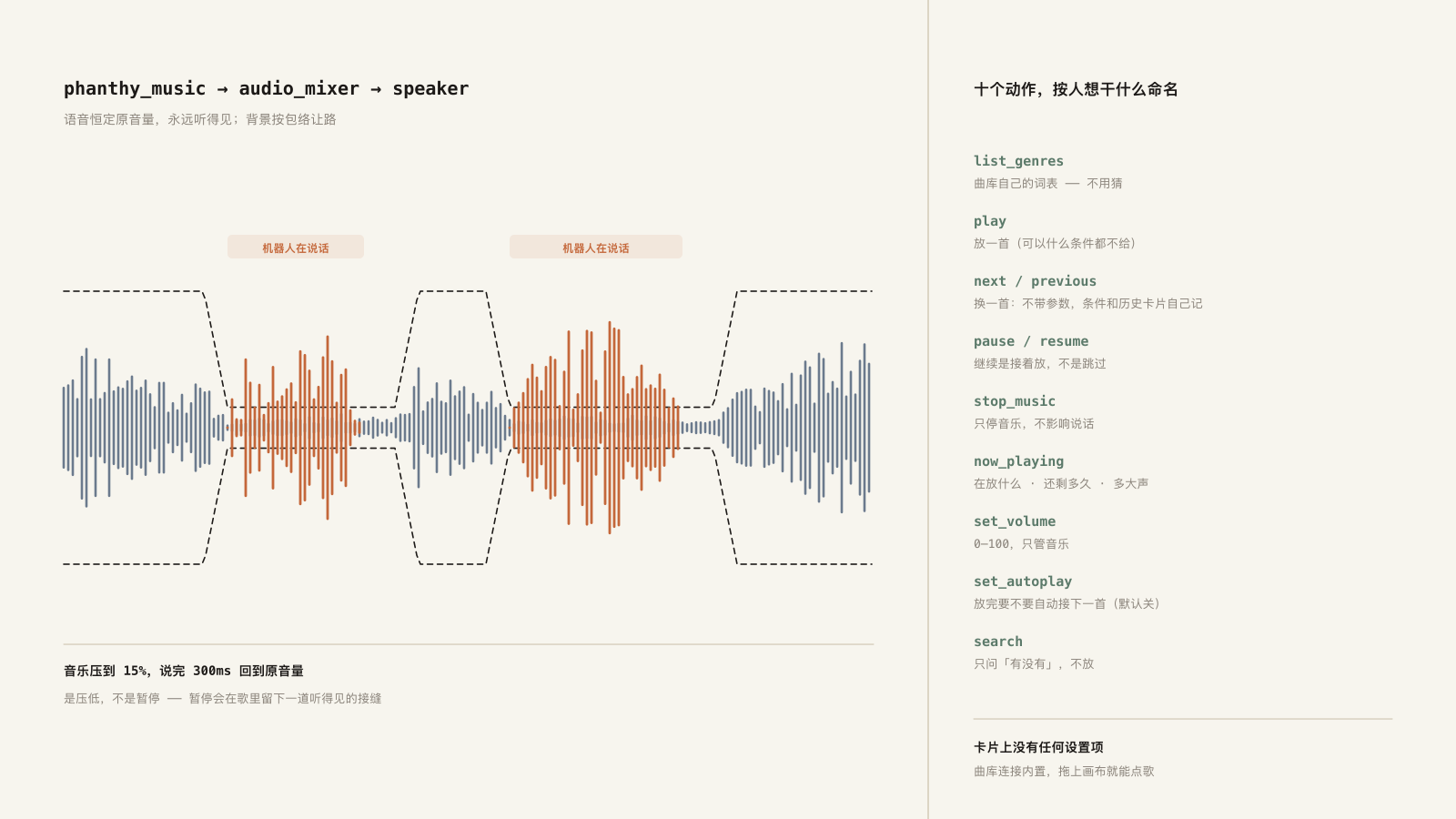
Ask it to put some music on — and keep talking to it while it plays
A music card with the catalogue connection built in: drop it on the canvas and ask for a song, with nothing to fill in. Pick by genre, language, artist or just “play something”, skip forward and back, pause, set the volume, ask what is on. Speech and music no longer fight: while the robot talks the music ducks instead of pausing, and comes back on its own. Interrupting the robot no longer kills the song, and stopping the song no longer cuts the robot off mid-sentence.
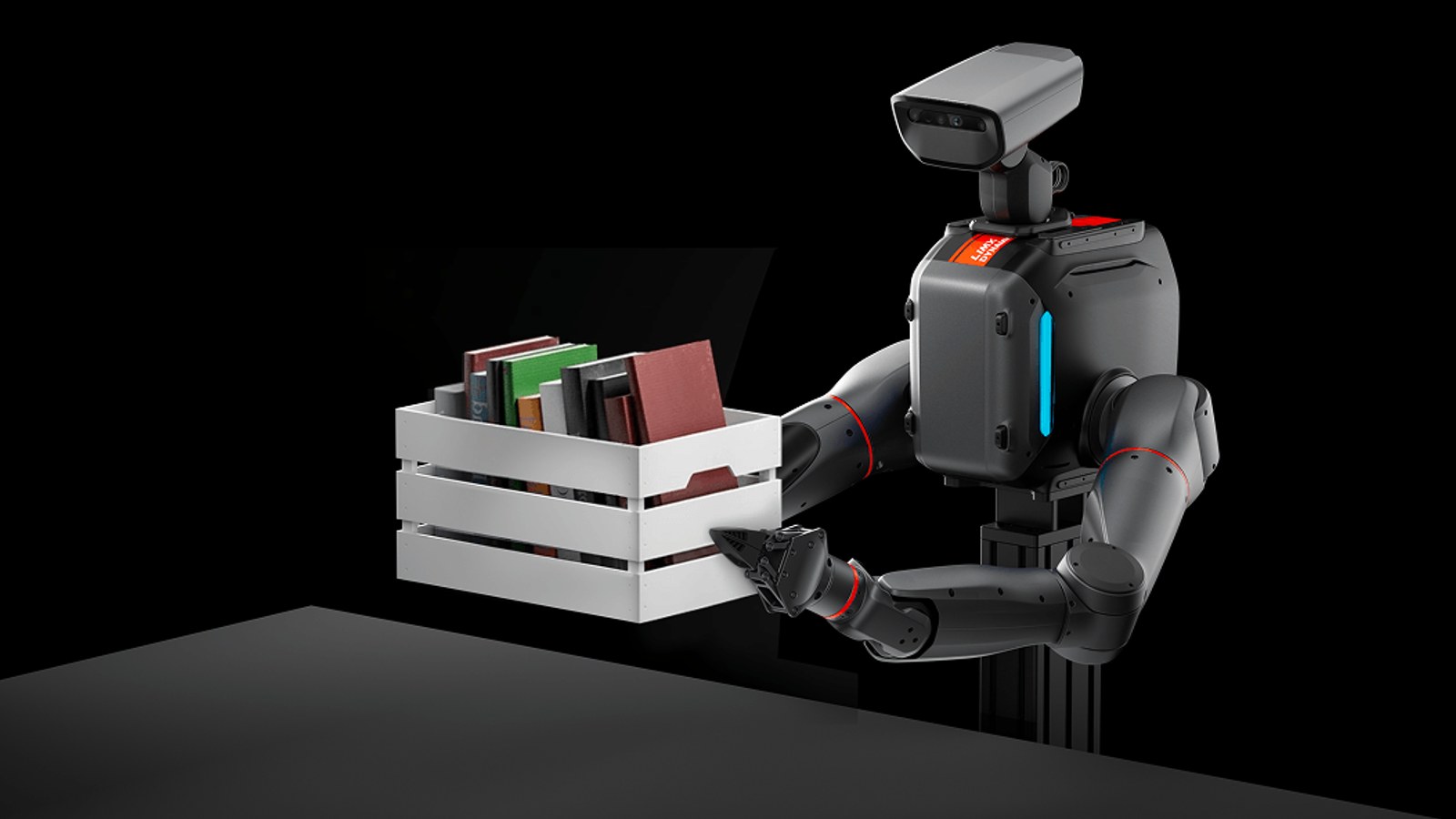
LimX TRON2 joins the platform — see both arms, and reset them with one call
The LimX Dynamics TRON2 dual-arm robot is now supported: the real pose of all 16 motors rendered as a skeleton from the vendor’s own URDF, three on-demand camera feeds (head, left wrist, right wrist), joint-target control of both arms, and a one-call reset to the arms-down pose.
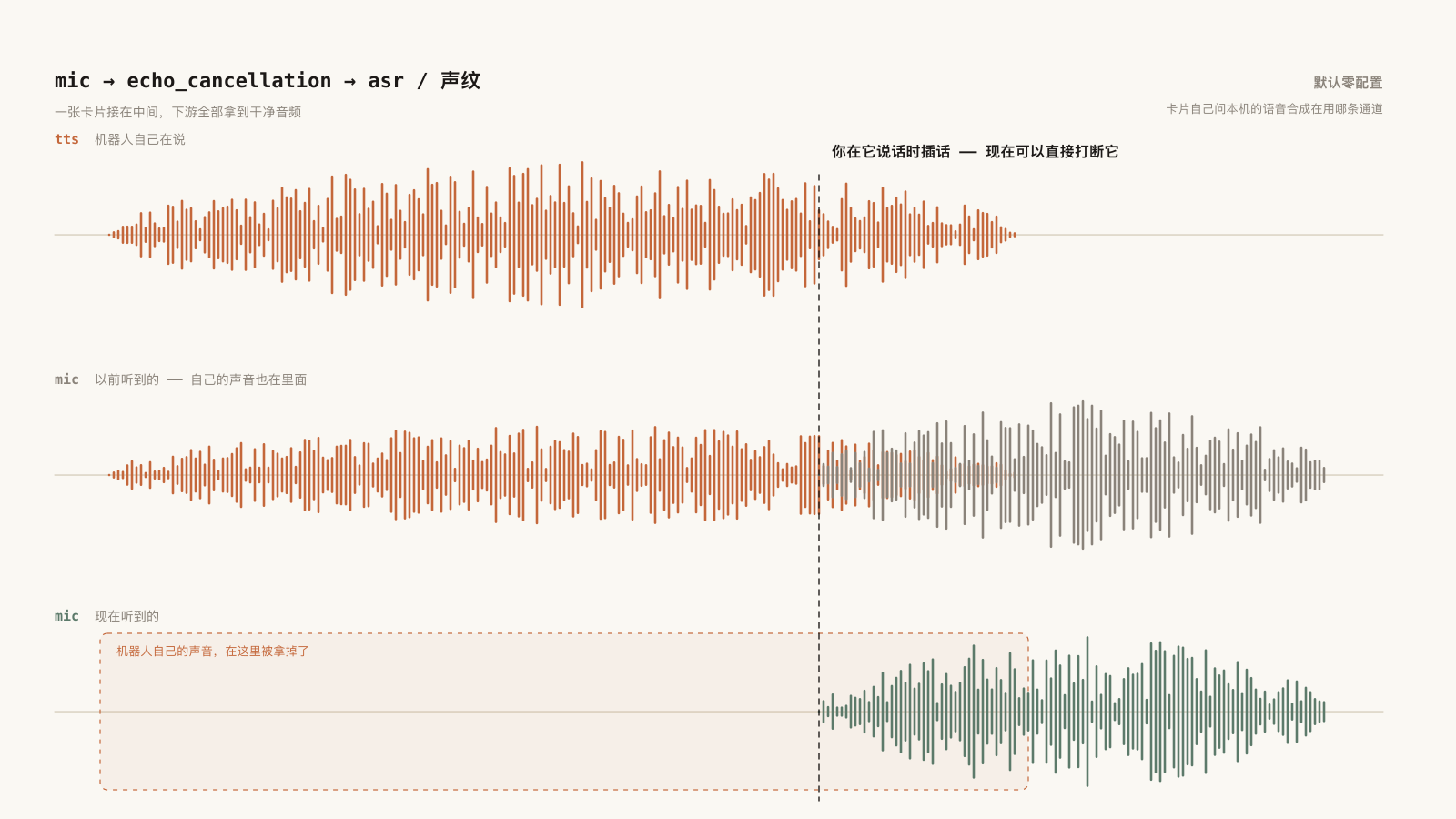
The robot stops mistaking its own voice for yours — and you can cut it off mid-sentence
A new echo cancellation card sits between the microphone and everything downstream. The robot’s own speech no longer leaks into its microphone, so it stops treating what it just said as something a person said, and stops filing its own voice away as somebody’s voiceprint. More to the point: you can now interrupt it while it is talking. There is nothing to configure — the card asks the local text-to-speech which channel it is using.
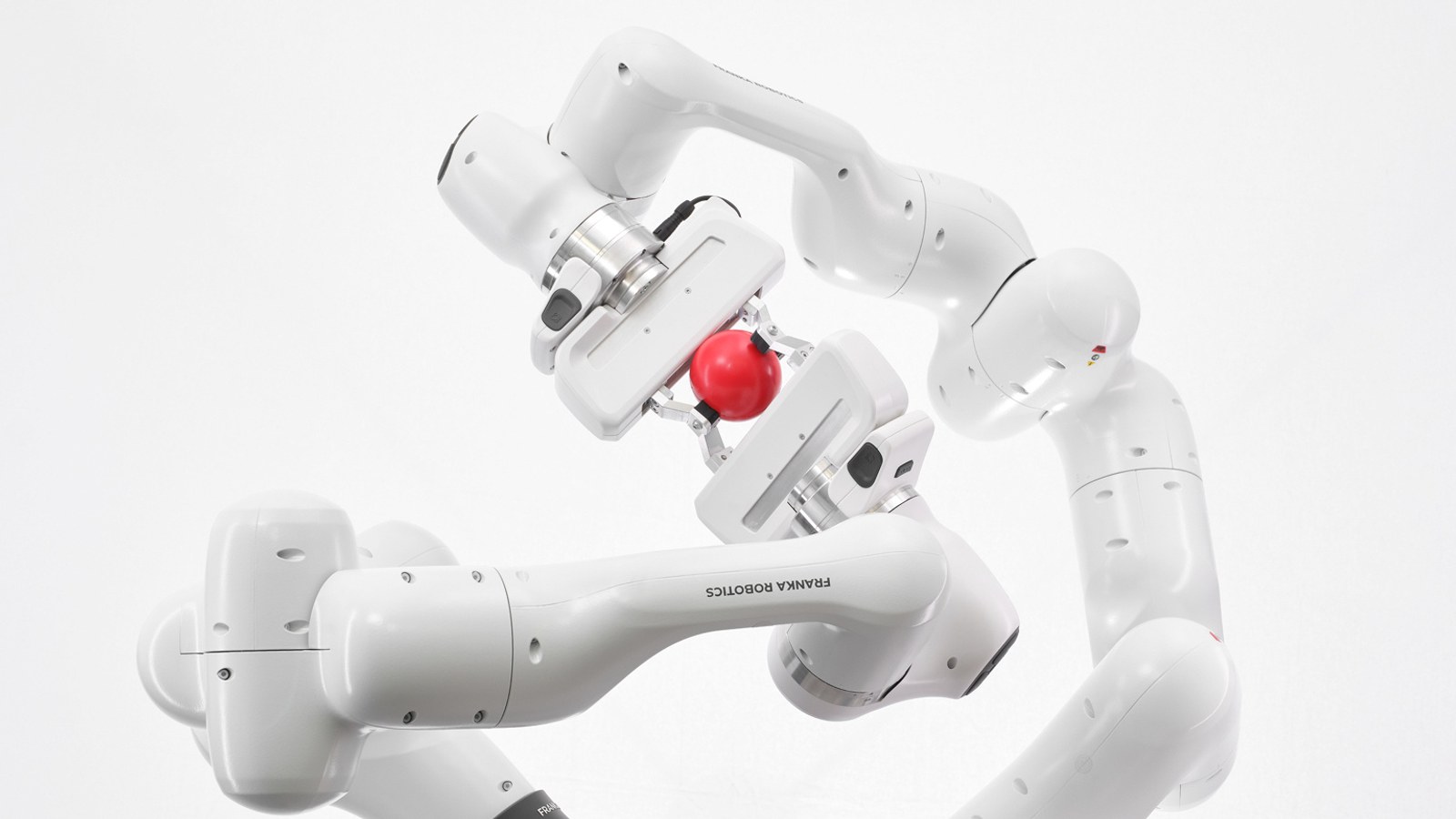
Franka FR3 joins the platform — plug in the cable and it finds itself
The Franka Research 3 is now supported with a read-only joint-state card: the real angle of all seven joints at 1–30 Hz, rendered as a skeleton that fetches its own URDF. The config dropdown lists the arms found on the directly connected wired network, by model, serial and IP — and one driver can serve several arms at once.
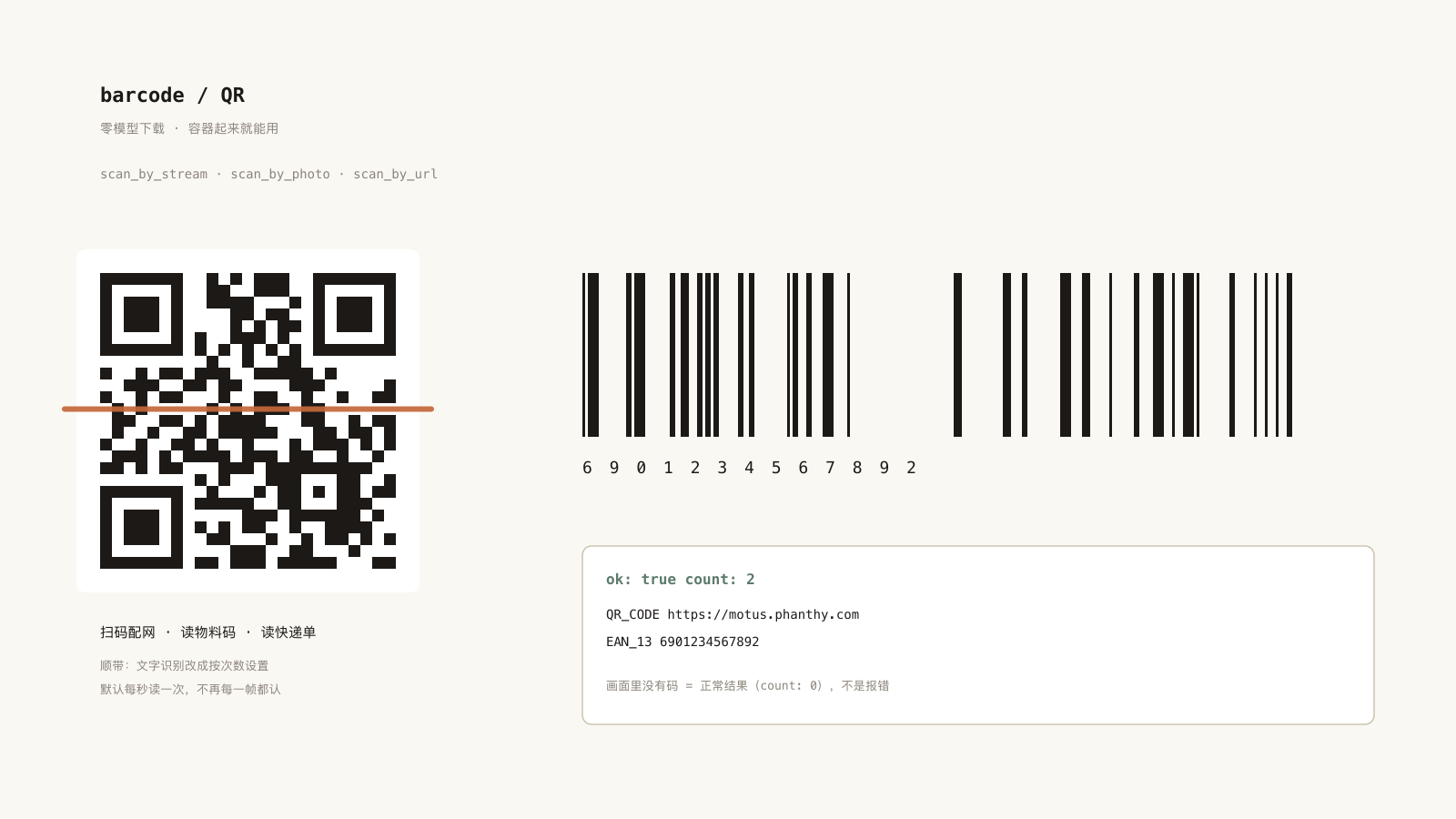
Hold up a code and the robot reads it
A new card reads QR codes and barcodes: scanning a code to join a network, reading a part number, reading a parcel label. No model to download — it works the moment the container is up. It can read the live picture, a photo, or a link. Text recognition also moved from “read every frame” to a rate you set, once a second by default.
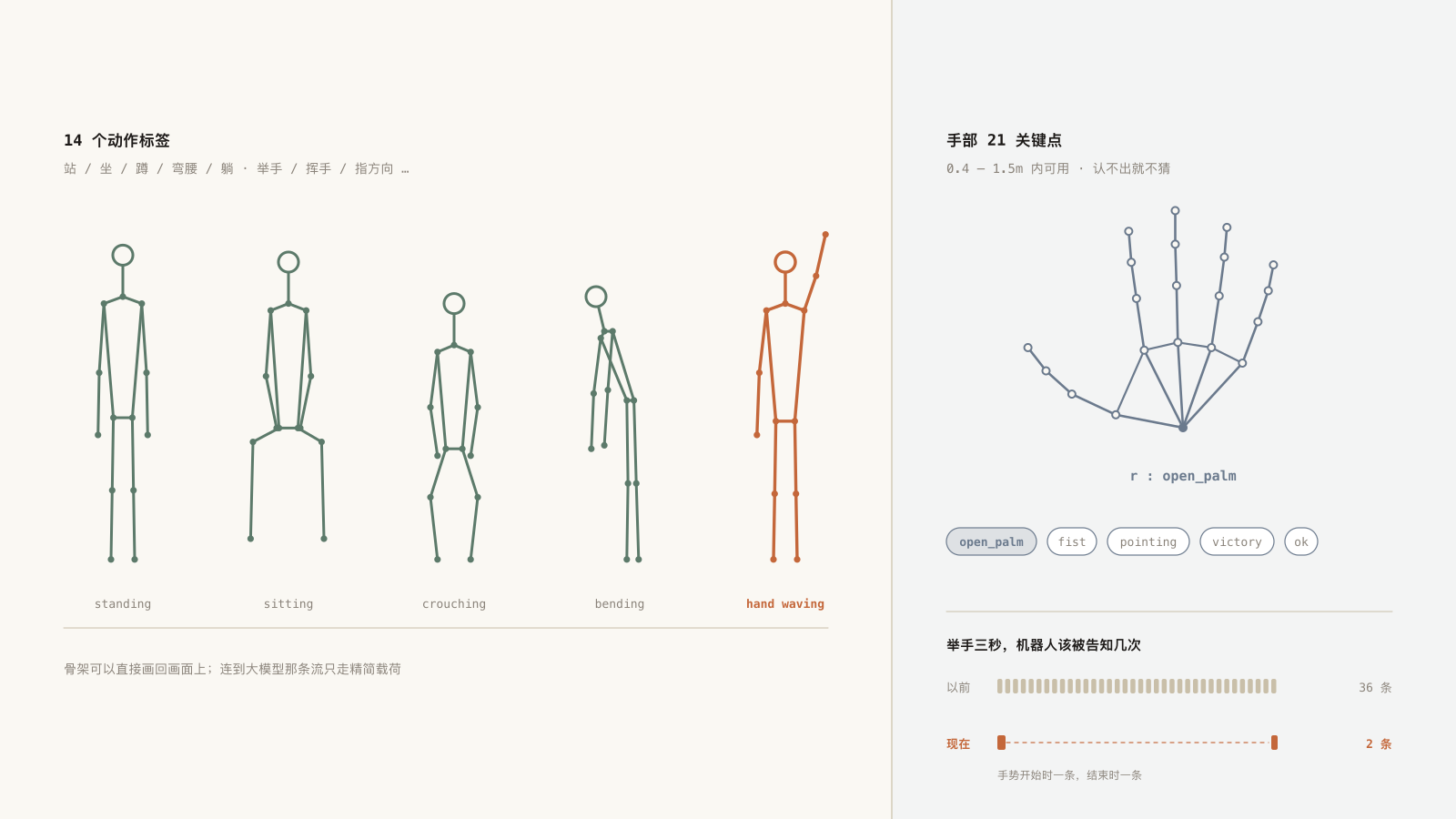
The robot can read your posture — and your gestures
A new card reads human joints from the camera and names what the person is doing — standing, sitting, crouching, bending, lying, raising a hand, waving, pointing: 14 labels in all, with the skeleton drawn on the dashboard and optionally on the picture itself. Waving at it from three metres away now wakes it once, at the moment the gesture starts. Up close it also reads 21 hand keypoints and names the shape: open palm, fist, pointing, victory, OK.
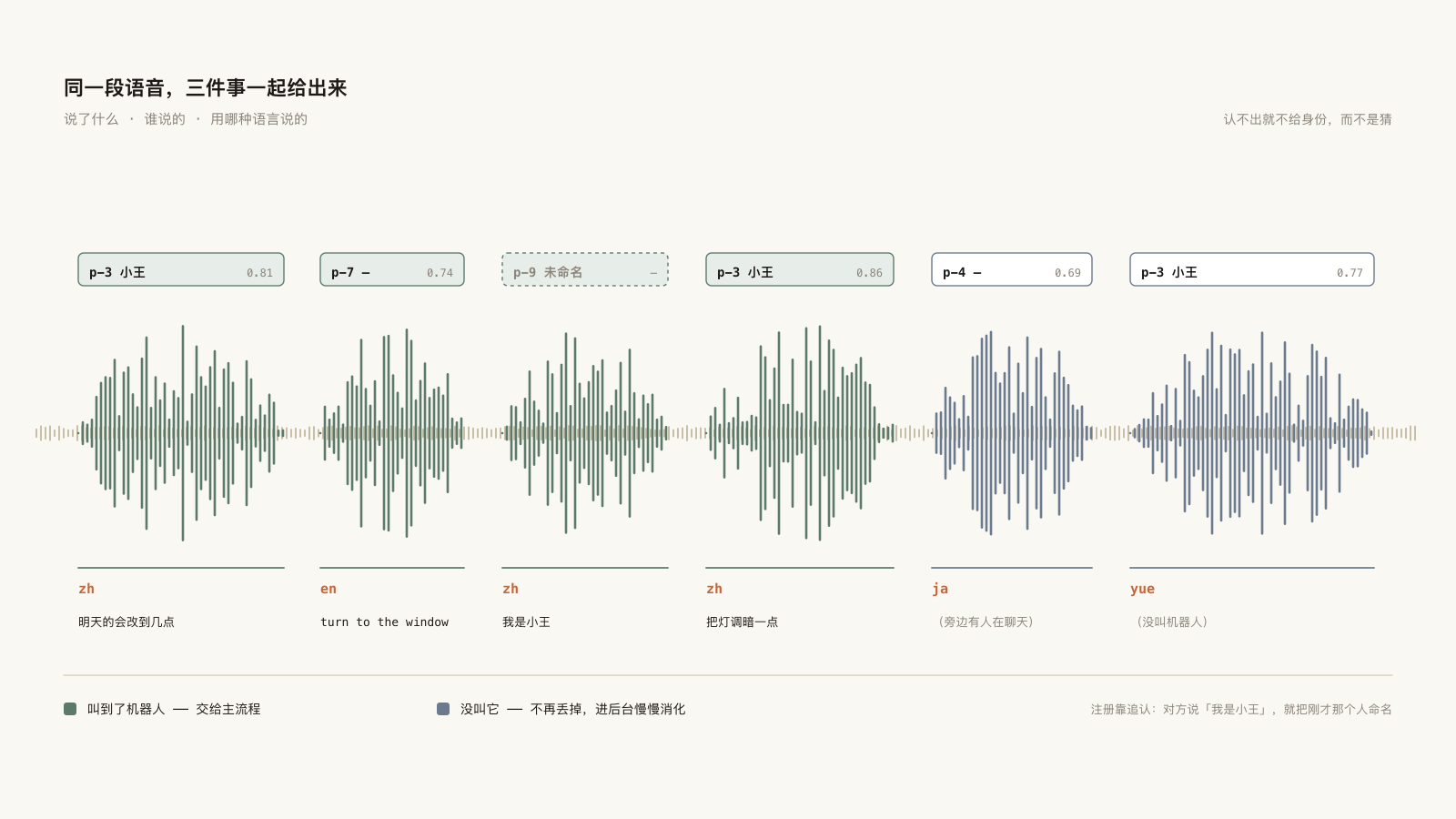
The robot now knows who is speaking, and in which language
Speaker recognition is in: when the robot hears a sentence, it is told who said it — even when it cannot see a face. If it does not recognise the voice it gives no identity rather than guessing. Speech recognition now also reports the language. And the sentences that were not addressed to the robot are no longer thrown away — they go to a background pass instead.
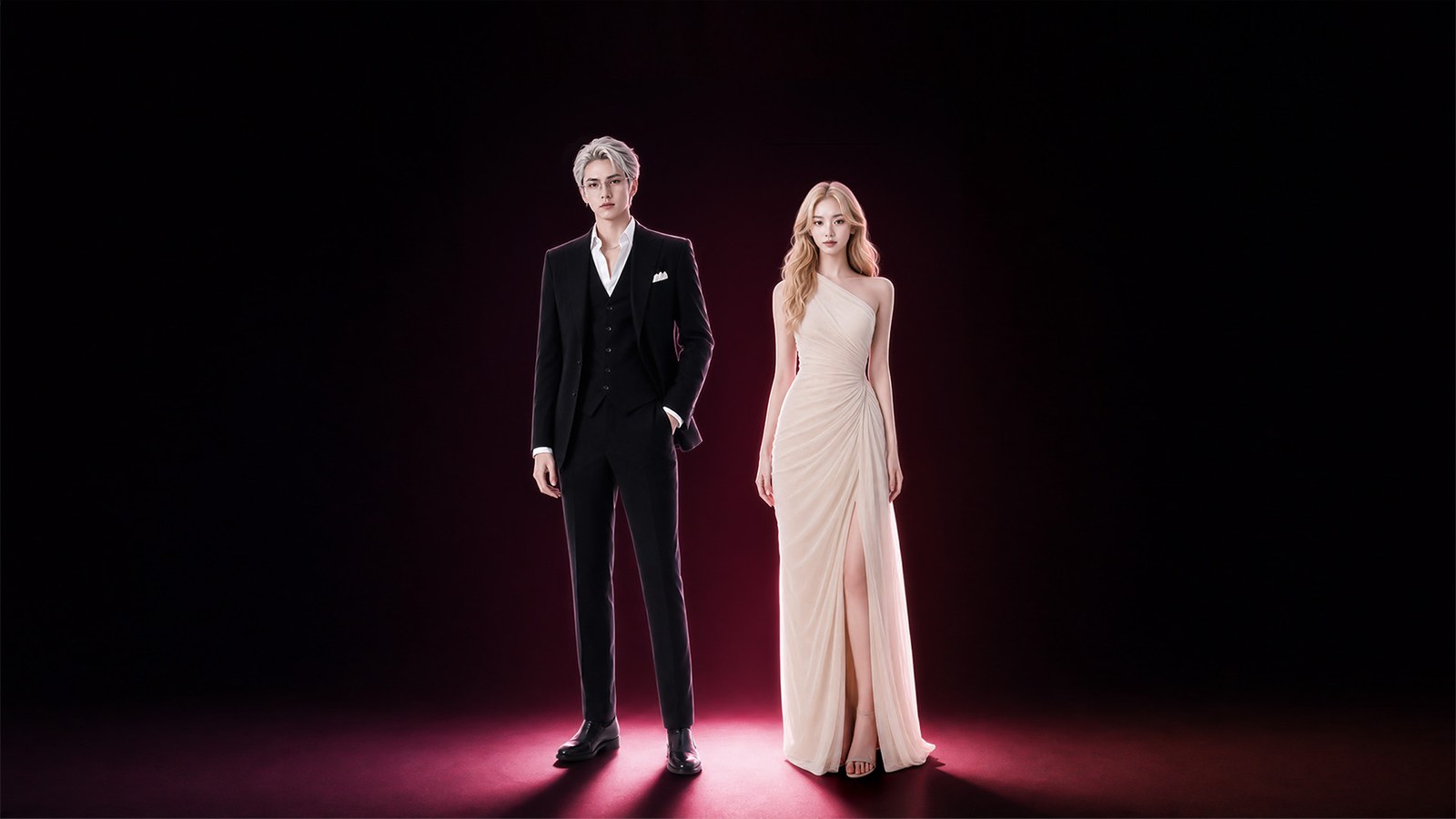
UBTECH U1 Pro joins the platform — it hears, speaks, and pulls faces
The UBTECH U1 Pro ultra-bionic humanoid is now supported: microphone, speaker, text-to-speech, facial expressions, head motions, both eye cameras, and switches for the firmware behaviours. The vendor wake word is turned off at startup so speech goes through the platform’s own pipeline.
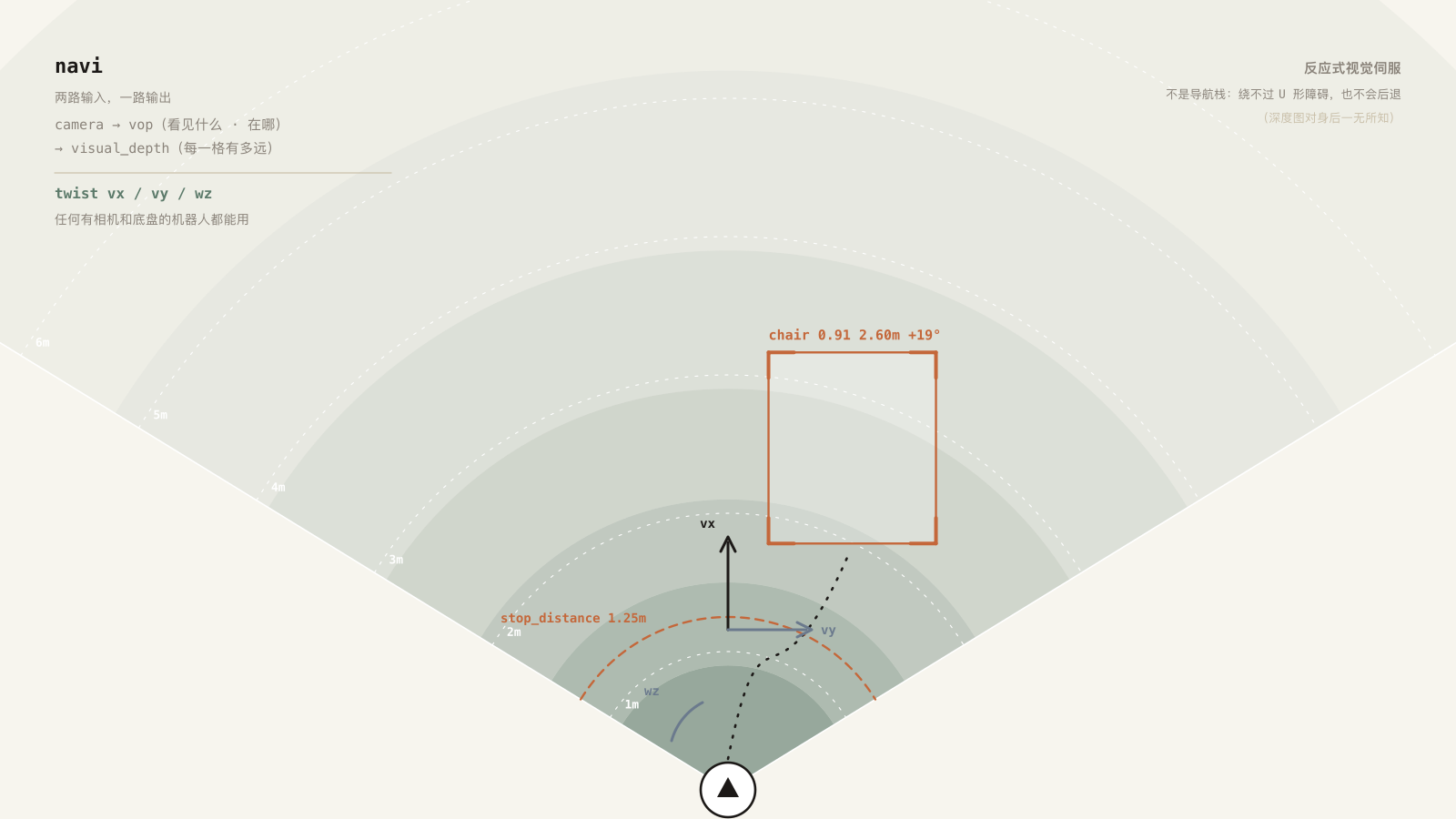
Visual navigation: no map, no waypoints — name something it can see and it goes there
A new navigation card takes what the camera recognises plus a depth image and produces chassis velocity — so any robot with a camera and a chassis can use it, with no vendor mapping stack and no waypoints set up in advance. Name a target and it turns toward it, approaches, slows down and steers around what is close, and stops at the distance you set.
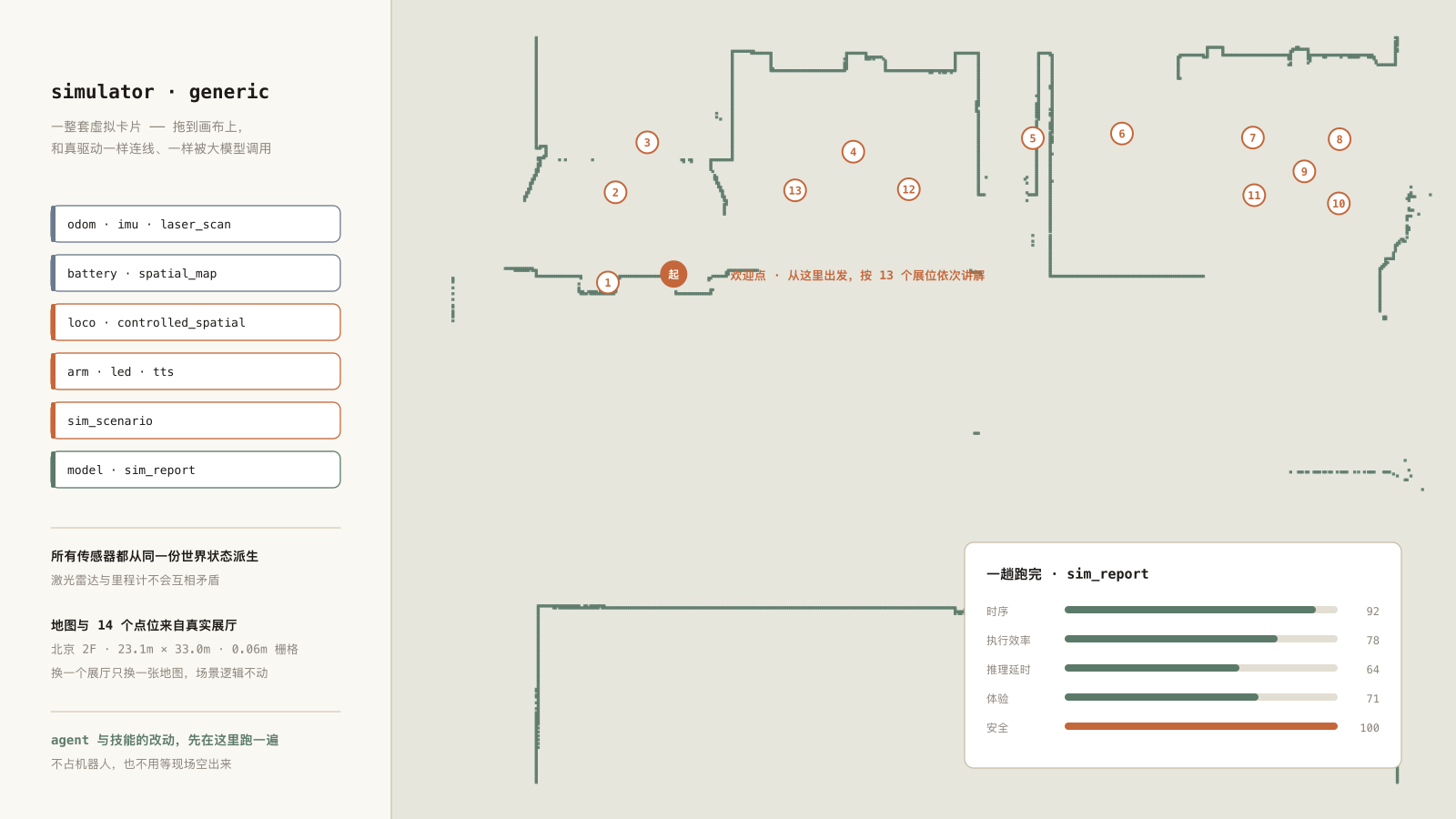
The simulation environment is now part of the platform — build agents and skills without a robot
A full set of virtual cards — odometry, IMU, lidar, battery, map, locomotion, navigation, arm, LED, speech, scenario — now drops onto the canvas and behaves exactly like real driver cards. Agent logic, skills and prompts can be built and run end to end without queueing for a real robot. The default world is the real Beijing 2F showroom, map and all 14 waypoints exported from the floor itself.
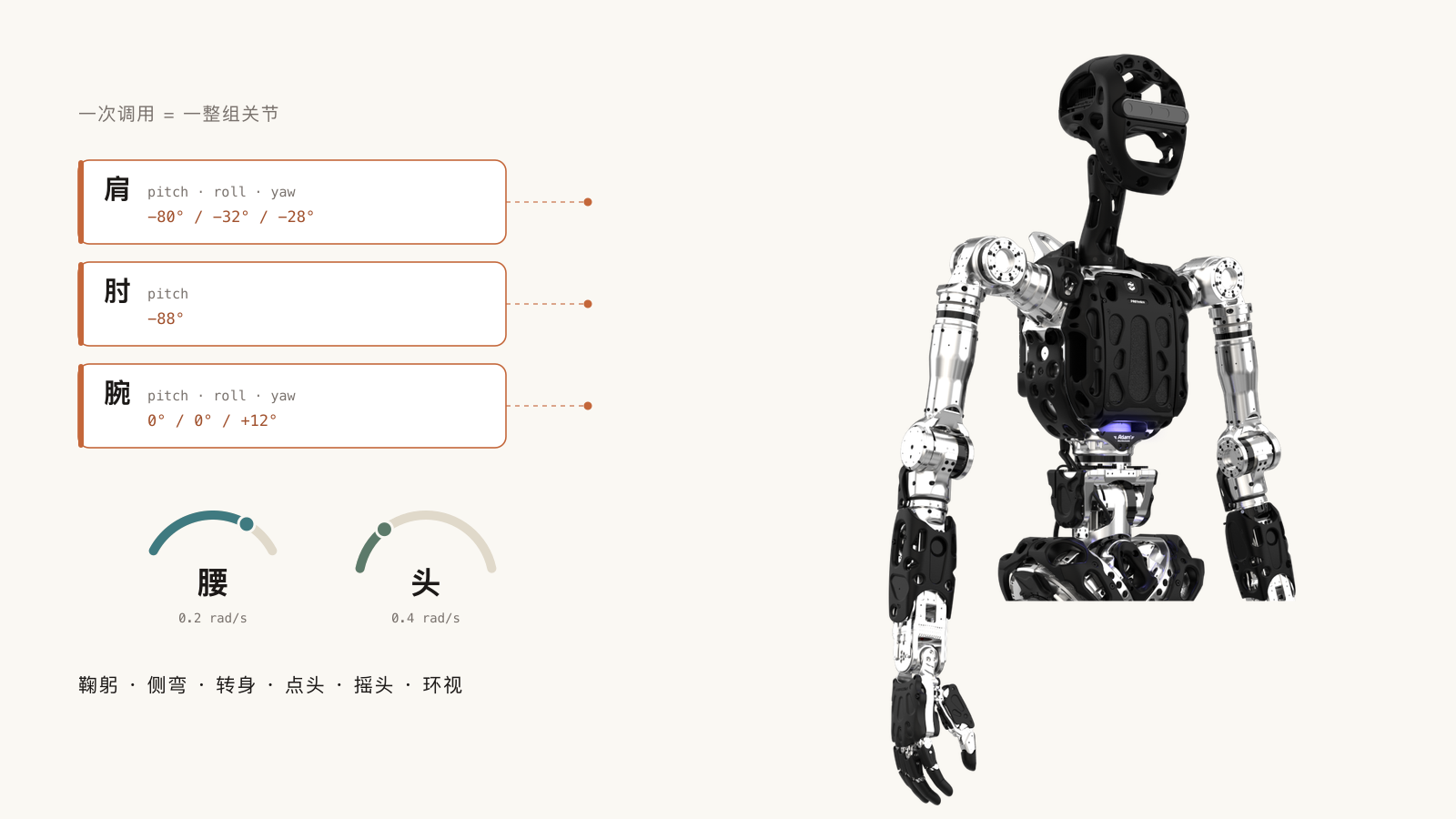
Adam poses a whole arm in one go — and can now bow and nod
Posing an arm used to mean setting one axis at a time. Now a single command places the whole shoulder, elbow or wrist group. The salute was re-calibrated on the real robot so the forearm no longer blocks the neck camera, and two new cards add waist and head motion: bow, side-bend, twist, nod, shake and scan.